Market Updates
April 1, 2026
10 mins
Market Update March 2026
The Iran War
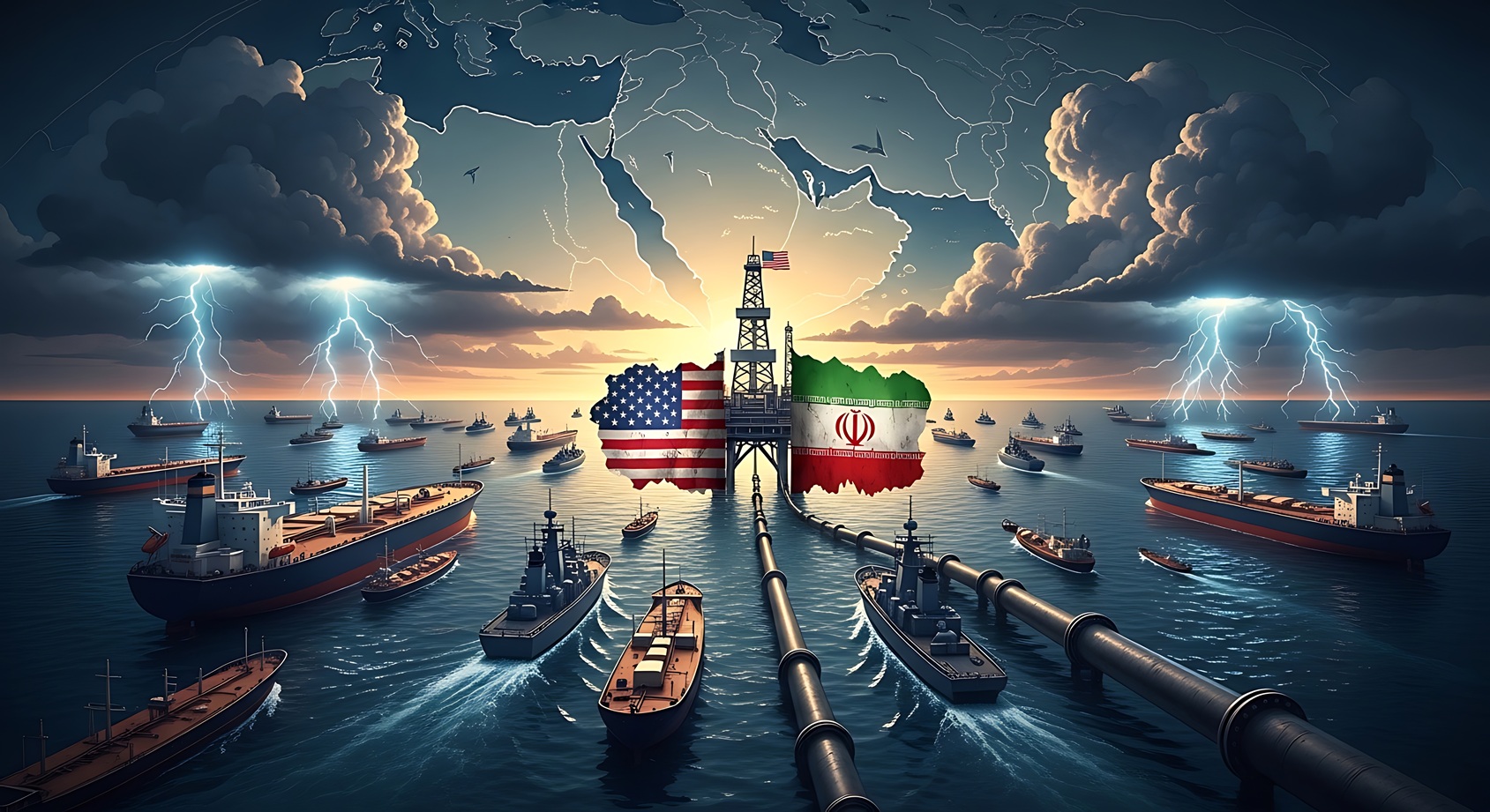
The Iran war is the biggest question mark and topic of the month, so let’s get into it. Staying away from reasoning, politics, or predictions of when it will actually end, we are going to focus on why this is so important to investing and what a prolonged conflict will do.
Topics
Why is the Iran War different from other wars?
Effects on the markets so far
What if the war ends today?
What if the war goes on?
What has history taught us?
Why is the Iran War different from other wars?
The Strait of Hormuz. Iran has been in and out of oil sanctions for decades; the shocks of attacking this country and their individual impact on oil prices have been a hot topic even over the last 12 months. The difference this time is Iran shutting downthe Strait of Hormuz, which disrupts oil and other products coming out of the Middle East. This represents about 20% of global oil and natural gas shipments. This is extremely disruptive to the delicate balance of supply and demand in the energy markets, which affects everyone who uses those fossil fuels, aka everyone in the world. This is similar to the Ukraine invasion of 2022, whichdrove natural gas prices up 300% and global food prices 24% over the following year as the world adjusted. Oil briefly hit $120 a barrel during 2022, only to decrease through the remainder of the year as global supplies were not largely impacted. In comparison, the IEA released 182 million barrels of oil during theentire 2022, while this month alone they agreed to release 400 million barrels.
Effects on the markets so far
The effects on the markets have been a decline in global equities, anywhere from 3-8%. What is causing this is the impact on company profits, inflation, and interest rates. In a vacuum, a spike in energy prices is manageable and will not drastically raise inflation or cause large economic hardship, but in a weak economy that should be cutting interest rates, this can be detrimental. The US has already been overspending, and this war, plus the cost of an economic downturn, will only force it to increase the money supply. Inflation was already moving up before the war, and low rates and greater supply would only push that higher. Therefore, the two scenarios being presented are higher rates with lower growth or lower rates with higher inflation, and equity markets do not like either.
Even though countries raised rates in 2022 when oil was increasing due to Ukraine, this comes at a time when the US economy (and global economies) is slowing down, unlike 2022 when the world was speeding up, coming out of COVID lockdowns.
The markets are bracing for a higher probability of potentially bad scenarios, which are far more likely than they were one month ago. While this is still early and the future is not written, some people are choosing to watch from the sidelines and sell equities into this.
What if the War ends today?
Good, the best-case scenario is that the war ended yesterday, and the second-best is that the war ended today. This would enable the global oil producers to begin to tackle the supply deficit that has been created. The large issue is that there are only so many oil tankers in the world and only so much oil can be delivered. It has been a month since the Strait of Hormuz was closed, which has created a deficit that needs to be overcome. The very delicate balance of the global oil market has been disrupted, and now it will need to play catch-up. This means higher prices for longer, as the supply will need to be refilled. Every day that the strait is closed, it will take multiple days to fill the deficit. A month of being closed will take months to rebalance, and multiple months may take a year.
Even if the war ended today and the Strait was open, there would be a lagging effect on oil prices and therefore, an ongoing strain on the market.
What if the War goes on?
Obviously, this is a worse scenario. Oil deficits grow, and long-term disruption takes place. There will be long-term cost effects across the globe for higher oil prices (potentially a lot higher than today), and global economic growth will be slowed. Other oil producers will ramp up production to take advantage of high oil prices and to satisfy global demand (US, Canada, Russia, etc.) and eventually create a supply glut if the Strait of Hormuz is opened again. This would be similar to countless other times oil prices have spiked for an extended period of time.
The economic impact would be considerable. Manufacturing would either need to slow down due to the inability to get energy, or prices would need to rise due to the cost of higher energy. In both scenarios, the outcome is slower growth.
What has history taught us?
History is not on our side in oil spike scenarios. Every recession has followed a spike in oil prices (except COVID-2020). That is not to say every spike in oil prices results in a recession; there have been a couple of times in history when oil spikes have not resulted in a recession. 1996 and 2017 were good examples of times when oil shocks were absorbed, and a recession did not follow. In 1996, the price spike was the result of a US missile strike in Iraq that lasted 2 days, and Iran threatened to shut down the Strait of Hormuz. In 2017, there was once again Middle East instability, leading to disruption in oil supplies and a “fear premium” on oil.

Summary
The Iran War has created a significant problem for the economy, and the sooner this ends, the better it will be. History has shown us this is not a good scenario to be in, and unlikely that it will end well. What is very important to understand is that the state of the economy going into an oil shock is very important. This does not mean this is guaranteed to result in a recession because recessions are always an unlikely event, but the probability has increased. Investors, companies, and people always prefer markets to move up, and they will all do what they can to make that happen.
Justin, Konrad, and Merriel
OAK BAY WEALTH /HARBOURFRONT WEALTH
The companies featured in this article are for illustration purposes only, this should not be viewed as a solicitation of buy or sell. Always talk to a professional before investing to know if the product is right for you. Past performance does not necessarily predict future results, each asset class has its own risks. This information transmitted is intended to provide general guidance on matters of interest for the personal use of the reader who accepts full responsibility for its use and is not to be considered a definitive analysis of the law and factual situation of any individual or entity. As such, it should not be used as a substitute for consultation with aprofessional accounting, tax, legal, or other professional advisors. Laws and regulations are continually changing, and their application and impact can vary widely based on the specific facts involved and will vary based on the particular situation of an individual or entity. Prior to making any decision or taking any action, you should consult with a professional advisor. The information is provided with the understanding that Harbourfront Wealth Management is not herein engaged in rendering legal, accounting, tax or other professional advice. While we have made every attempt to ensure the information contained in this document is reliable. Harbourfront Wealth Management is not responsible for any errors or omissions, or for the results obtained from the use of this information. All information is provided "as is," with no guarantee of completeness, accuracy, timeliness or as to the outcome to be obtained from the use of this information, and is without warranty of any kind, express or implied. The opinions expressed herein do not necessarily reflect those of Harbourfront Wealth Management Inc. The particulars contained herein were obtained from sources we believe to be reliable but are not guaranteed by us and may be incomplete. The opinions expressed are not to be construed as asolicitation or offer to buy or sell any securities mentioned herein.
Source: Ukraine WarStrategic Release - https://www.globalbankingandfinance.com/iea-proposes-largest-ever-oil-release-strategic-reserves-wsj/
Source: Iran War Strategic Release - https://www.bloomberg.com/news/articles/2026-03-11/iea-confirms-huge-release-of-emergency-oil-stockpiles
Stay informed with our Insights
Our insights into the finance to keep you informed and educated